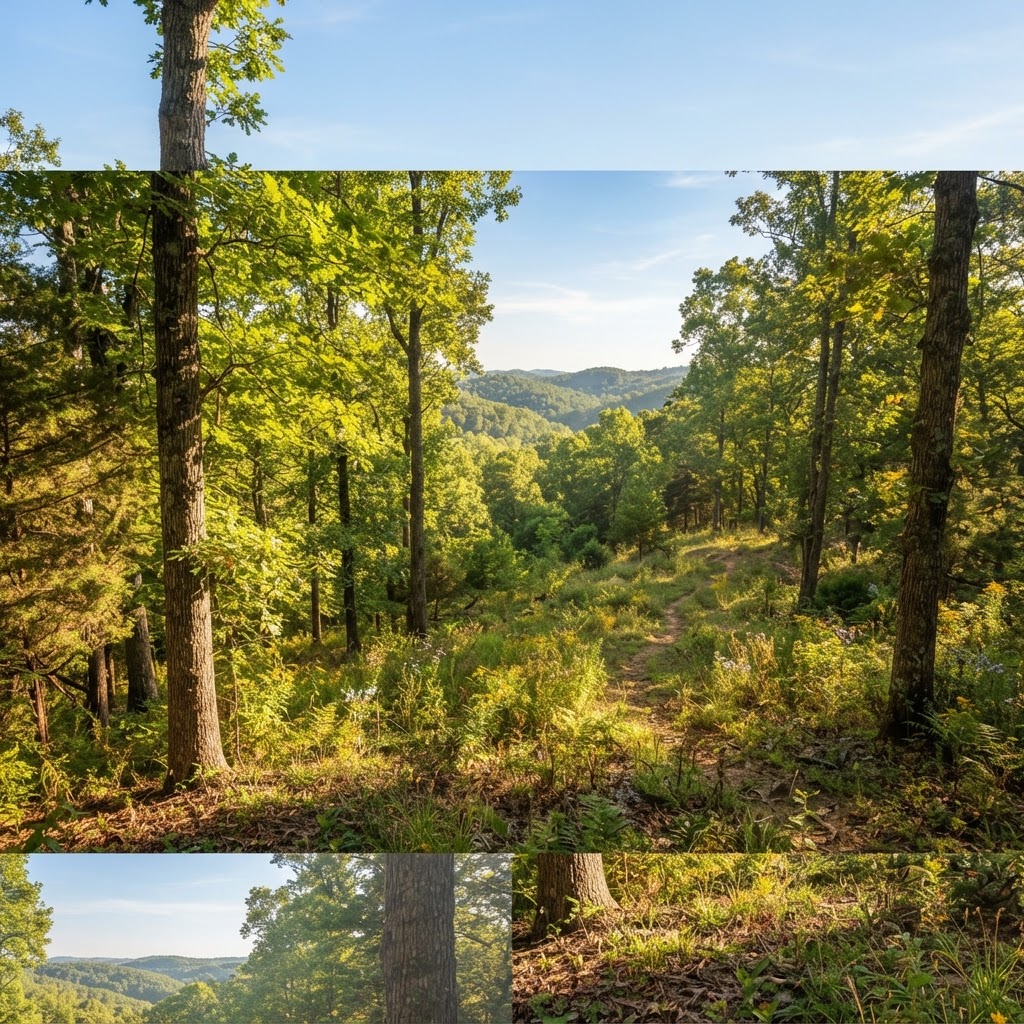
Wildlife Habitat Management in Middle Tennessee
Deer Habitat Improvement · Turkey & Quail Habitat · Food Plot Clearing · Hunting Property Management
Whether you own 20 acres or 500 acres, improving wildlife habitat can dramatically increase deer, turkey, quail, and other native species while making your property healthier and easier to manage. Back 40 Land Services designs and builds habitat improvements throughout Middle Tennessee using professional forestry equipment and years of land management experience.
Most landowners don't search for "wildlife habitat management" — they search for how to get more deer on their property, how to improve their hunting land, how to clear a food plot, or how to restore an overgrown pasture. Whatever brought you here, Back 40 Land Services can help you build a more productive, more enjoyable property.
🌿 Did you know? More than 80% of wildlife habitat in the United States exists on private lands — making landowner stewardship a critical part of wildlife conservation across Tennessee and the Southeast.
Our Wildlife Habitat Services
From food plot clearing and bedding area creation to invasive species removal and timber stand improvement, our services cover every aspect of hunting property improvement and wildlife management in Tennessee.
Forestry Mulching for Wildlife
Selectively mulch overgrown brush and invasive species while preserving mature timber — the single most effective habitat improvement tool on most properties.
Bedding Area Creation
Create dense, secure cover zones where deer and other wildlife can rest, stay hidden, and feel safe on your property year-round.
Travel Corridor Development
Open and define natural wildlife movement paths — funnels, pinch points, and edge transitions — that concentrate game and improve hunting predictability.
Edge Feathering
Transition zones between timber and open ground are the most productive wildlife habitat on any property. We create and maintain productive edge habitat throughout your land.
Food Plot Clearing & Preparation
Clear trees, brush, and stumps to create open areas ready for planting. We deliver a finished, sun-exposed seedbed sized to your planting goals.
Native Grass & Wildflower Restoration
Remove invasive brush to allow native grasses, forbs, and wildflowers to re-establish — improving forage production, pollinator habitat, and brood-rearing cover.
Timber Stand Improvement (TSI)
Remove low-value or competing timber to allow your best trees to grow stronger, open the canopy for light, and improve mast production for deer and turkey.
Invasive Species Removal
Privet, autumn olive, Japanese honeysuckle, and other invasive plants reduce habitat quality dramatically. We eliminate them without damaging native vegetation.
Trail Systems & Access Roads
Develop internal trail networks that allow quiet, efficient access to all areas of your property for hunting, management, and recreation.
Creek Crossings
Create passable crossing points along creek drainages to improve both wildlife movement and your own ability to access every acre.
Water Hole & Small Pond Construction
Excavate and shape water features that attract and hold wildlife, create waterfowl habitat, and improve overall biodiversity on your land.
Shooting Lane Clearing
Open precise shooting lanes with minimal disturbance — maintaining the natural look of your stand locations while dramatically improving your shooting opportunities.
Fire Breaks
Create defensible fire breaks around your property or timber stands for safety, prescribed burn management, or wildfire protection.
Pollinator Habitat Development
Restore areas of native wildflowers, legumes, and low-growing shrubs to support bees, butterflies, and other pollinators that are critical to a healthy food web.
Brush Piles for Rabbits & Quail
Construct strategic brush piles that provide cover, nesting sites, and thermal protection for rabbits, quail, and ground-nesting birds.
Our Wildlife Habitat Process
Every habitat improvement project starts with a conversation and ends with a property you're proud of. Here's how we work:
Walk the Property
We start with a thorough walkthrough of your land — identifying current conditions, vegetation types, and wildlife signs.
Discuss Your Goals
Whether you want more deer, better turkey hunting, food plots, or general land health, we align our plan with your specific objectives.
Identify Wildlife Needs
We assess what the property needs — bedding cover, food sources, water, travel corridors, invasive species control, or a combination.
Mark Improvement Areas
Before any equipment runs, we walk and mark every area to be cleared, thinned, or improved — so there are no surprises.
Complete Habitat Work
Our CAT 275 forestry mulcher gets to work, executing the plan precisely and professionally.
Review & Plan Future Work
After completion, we walk the finished improvements with you and discuss any follow-up work or future improvement opportunities.
Deer Habitat Improvement
Great deer properties aren't accidents — they're built. Whitetail deer thrive where they have access to quality food, secure bedding cover, reliable water, and defined travel corridors. Back 40 Land Services specializes in creating all of these elements using precision forestry mulching and selective clearing.
Bedding Cover
Dense, secure areas where deer rest and feel safe. We create and protect these zones to hold deer on your property.
Browse Production
Opening the canopy allows native browse plants like pokeweed, greenbriar, and forbs to explode — high-quality deer forage.
Funnels & Pinch Points
We identify and enhance natural deer movement funnels to concentrate game and improve hunting success.
Travel Corridors
Clear defined paths between bedding and feeding areas to create predictable, huntable deer movement patterns.
Food Sources
Food plot clearing and mast tree improvement maximize available food throughout the year.
Security Cover
Thick edge cover and protected interior areas keep mature bucks comfortable and on your land year-round.
Forestry mulching for deer habitat improvement is one of our most requested services across Williamson, Maury, Rutherford, and surrounding Tennessee counties.
Turkey Habitat Improvement
Healthy turkey populations depend on a mix of nesting cover, brood-rearing habitat, and open woodland with abundant insects and native plants. Middle Tennessee has excellent turkey potential, but overgrown or mismanaged properties quickly lose their turkey populations as habitat quality declines.
- Nesting Cover — dense herbaceous areas with overhead concealment for nesting hens.
- Brood Habitat — open, bug-rich areas with low ground cover where poults can feed and move easily.
- Open Timber — mature timber with open understory where gobblers can strut and be seen by hens.
- Native Grasses — native warm-season grasses provide critical brood habitat and thermal protection.
- Bug-Producing Vegetation — native wildflowers and disturbed areas produce the insect populations that young turkeys depend on for survival.
Quail Habitat & Early Successional Cover
Bobwhite quail numbers have declined significantly across Tennessee due to habitat loss — specifically the loss of early successional growth, brushy edge cover, and native grasses. The good news: quail habitat is relatively inexpensive to create and maintain with the right equipment and approach.
- Early Successional Growth — disturbed areas with low, brushy vegetation are the foundation of quail habitat.
- Edge Habitat — the transition between woods and open areas is where quail spend most of their time.
- Brush Piles — strategically placed brush piles give quail and rabbits escape cover from aerial predators.
- Native Grasses — warm-season bunchgrasses like little bluestem provide nesting cover and thermal protection.
- Pollinator Habitat — native wildflowers and legumes support the insect populations quail chicks need during their first weeks of life.
The Science Behind Habitat Improvement
Understanding why habitat work produces results helps you make smarter decisions about your land. These are the core principles that guide every project we complete in Middle Tennessee.
Why Edge Habitat Matters
The single most productive habitat feature on any property is edge — the transition zone where timber meets open ground, or where thick cover meets a food source. Deer, turkey, quail, and most other wildlife species spend the majority of their time in or near edge habitat. That's because edge provides simultaneous access to food, cover, and escape routes. A property with 500 acres of unbroken timber has far less wildlife than a property with 200 acres that includes well-developed edge habitat. One of the most impactful things we do on any habitat project is create, extend, and feather out edge structure throughout the property.
Why Sunlight Reaching the Forest Floor Is Critical
A closed, dense forest canopy is one of the lowest-value wildlife habitats that exists. When the canopy closes out sunlight, nothing grows on the forest floor — no native grasses, no forbs, no browse, no mast-producing shrubs. Deer have nothing to eat. Turkey poults can't find insects. Quail can't nest. Timber stand improvement — selectively removing low-value trees to open the canopy — unleashes an explosion of native plant growth that benefits every species on your property. Within a single growing season of a TSI project, landowners frequently see dramatic increases in native browse and forage that directly benefit deer populations.
Why Invasive Species Destroy Wildlife Habitat
Invasive plants like privet, autumn olive, Japanese honeysuckle, and multiflora rose are highly aggressive competitors. They grow faster than native plants, produce seed earlier, and spread rapidly — eventually dominating the forest understory and smothering out the native vegetation that wildlife depends on. Privet in particular forms nearly impenetrable monocultures that deer avoid, birds won't nest in, and turkey can't forage through. Removing invasive species with forestry mulching allows native plants to re-establish from the existing seed bank — often within a single growing season. This is one of the highest-impact investments a Tennessee landowner can make in their property's long-term wildlife productivity.
Why Early Successional Growth Benefits Deer and Turkey
Early successional habitat — areas of young, dense, low-growing vegetation following disturbance — is among the most valuable habitat type for both deer and turkey. For deer, it provides thick bedding cover, abundant browse, and concealment from predators. For turkey, it creates the open, brushy, insect-rich environment that poults need to survive their first weeks of life. Creating and maintaining areas of early successional growth through selective forestry mulching and controlled disturbance is a cornerstone of effective habitat management. Without periodic disturbance, properties transition through successional stages and eventually lose this critical habitat type entirely.
How Travel Corridors Influence Wildlife Movement
Wildlife — especially whitetail deer — are creatures of habit. They use the same travel routes repeatedly when moving between bedding areas, food sources, and water. These travel corridors often follow terrain features: drainages, ridge lines, funnels between thick cover, and edges. When corridors are overgrown or broken, deer movement becomes unpredictable. When corridors are developed, enhanced, and connected to bedding and feeding areas, deer movement becomes consistent and huntable. Identifying and improving travel corridors — including creating pinch points that channel movement through specific areas — is one of the most effective hunting property improvements we make.
Every Project Starts With Walking the Property
Every wildlife habitat project begins with walking the property. We evaluate terrain, existing timber, invasive vegetation, water sources, and your goals — whether that's improving hunting opportunities, increasing biodiversity, or making the property easier to enjoy. We look at what's there, what's missing, and what's working against you.
Because every tract is different, we build a management plan around your land instead of using a one-size-fits-all approach. A 15-acre parcel in Williamson County has completely different needs than a 300-acre hunting tract in Giles County. Whether you own 10 acres or 500 acres, our goal is the same: leave your property in better shape than we found it — with a clear plan for where it goes from here.
Common Habitat Improvement Projects
Whether you need one targeted improvement or a comprehensive property-wide plan, here are the most impactful projects we complete for landowners across Middle Tennessee:
How Long Does Habitat Work Take?
Common questions from landowners — answered honestly.
How long does a typical habitat project take to complete?
Most single-feature projects — a bedding area, a food plot clearing, a shooting lane system — are completed in one to two days. Larger, property-wide habitat improvement plans may take three to five days depending on acreage and terrain complexity. We'll give you a clear timeline during your free property consultation.
When is the best time of year to do habitat work?
Late fall through early spring (October–March) is typically the best window for habitat work in Middle Tennessee. Leaves are down, making it easier to evaluate the property, see terrain, and work precisely. Dormant-season clearing also allows native plants to emerge during the following spring growing season — meaning faster wildlife response times.
How quickly will wildlife respond after habitat improvements?
Many landowners see increased deer and turkey activity within the first weeks of completion — especially if work is done near existing bedding or travel routes. Native grasses and browse plants typically begin re-establishing within 60–90 days. Full habitat maturity, with established food sources, dense bedding cover, and defined movement patterns, generally develops over one to three growing seasons.
How often does habitat need to be maintained?
That depends on the improvement type. Shooting lanes and food plots may need annual maintenance. Bedding areas and timber stand improvements often go three to five years before follow-up work is needed. We discuss a long-term maintenance plan with every property owner at project completion.
Why Wildlife Habitat Management Matters
Good land stewardship benefits every landowner — regardless of whether you hunt. A well-managed property is healthier, more valuable, and more enjoyable to own.
Healthier Forests
Thinning overcrowded stands reduces disease pressure, improves nutrient cycling, and allows your best timber to thrive for decades.
Better Hunting
Strategic habitat improvements directly increase deer density, turkey populations, and game movement predictability on your property.
More Biodiversity
A well-managed property supports a wider variety of native plant and animal species — from songbirds and pollinators to large game.
Reduced Invasive Species
Left unchecked, invasive plants like privet and autumn olive take over and crowd out native vegetation. Habitat management stops the spread.
Improved Water Quality
Properly managed streamside vegetation filters runoff, prevents erosion, and keeps creeks and ponds on your property clean and clear.
Better Property Value
Well-managed hunting and recreational properties consistently command significantly higher valuations than neglected acreage.
Easier Long-Term Maintenance
One professional habitat improvement session reduces future workload dramatically — and makes ongoing management far simpler and less expensive.
Forestry Mulching for Wildlife — The Best Tool in Tennessee
Forestry mulching is the most effective, most wildlife-friendly land clearing method available. Unlike bulldozing, burning, or herbicide application, forestry mulching removes unwanted brush with pinpoint precision, leaves behind a natural wood chip mulch layer that prevents erosion and retains moisture, and causes minimal soil disturbance — which is critical for native plant regrowth.
| Forestry Mulching | Bulldozing / Burning |
|---|---|
| Selective, precise removal | Removes everything indiscriminately |
| No soil disturbance | Destroys topsoil and seed bank |
| Mulch layer retains moisture | Bare soil dries out quickly |
| Native plants re-establish fast | Weed species often dominate after |
| No hauling or burning | Debris removal adds cost and time |
Frequently Asked Questions
Common questions about wildlife habitat management, hunting property improvement, and our services in Middle Tennessee.
Wildlife Habitat Management Across Middle Tennessee
Back 40 Land Services provides wildlife habitat improvement, hunting property management, and native habitat restoration across:
We specialize in turning neglected or overgrown properties into productive wildlife habitat and recreational properties that landowners are proud to own and manage.
Wildlife Habitat as Part of a Full Property Plan
Wildlife habitat management is often the finishing layer of a larger property development project — transforming cleared or reclaimed land into a truly productive recreational property.
Overgrown Property → Premier Hunting Land
The most effective approach for transforming neglected property into quality hunting land: forestry mulching removes invasive species while preserving mature timber, targeted brush removal opens key corridors, selective clearing creates food plot openings, and habitat management shapes everything into a property that holds deer, turkey, and other wildlife year-round.
Farm Property — Ag + Recreation
Farm properties benefit enormously from combining agricultural land improvement with habitat work. Expanding field acreage creates open feeding areas, a farm pond provides water for both livestock and wildlife, and targeted habitat management — edge feathering, bedding areas, and invasive species removal — turns a productive farm into a premier recreational property.
Free Property Consultation
We'll walk your land, discuss your goals, and develop a habitat improvement plan tailored to your property — at no cost or obligation.
(615) 609-0053✅ Veteran-Owned & Operated
✅ Licensed & Insured
✅ Free On-Site Estimates
✅ CAT 275 Forestry Mulcher
✅ Serving All of Middle TN
We Improve Habitat For:
Schedule Your Wildlife Property Evaluation
We'll walk your property with you and evaluate what it needs — and what it has the potential to become. Whether you own 10 acres or 500 acres, the consultation is free and the plan is yours to keep.
During your property walk, we'll discuss: